Monday, May 23, 2011

Information about Cleveland


. The Economic Climate of Cleveland 

"Last night an eighty-year-old-grandmother was murdered on Euclid Avenue. Some kids needed cash for crack, so they stuck a knife in Grandma" (indicative of a declining area of the city). -quote from
 Talk Radio 
In 1978, the Cleveland, Ohio, city government defaulted on 15.5 million dollars in short-term loans from local banks. 
Cleveland became the first city since the Great Depression to default on its financial obligations. At that point in time, the city was more than thirty million dollars in debt. There were numerous reasons why Cleveland defaulted on its debts. Chief among these reasons was a declining population and relocation of businesses outside of Cleveland during the 1960s and 1970s. As businesses and people relocated, property values declined, hindering the city's ability to collect ample property taxes to meet its needs. City residents or Cleveland city officials repeatedly rejected tax increases during this period, failing to replace the funds lost due to the dwindling tax base. 
Cleveland remained in default until 1987.http://www.ohiohistorycentral.org/entry.php?rec=1646 
3. The movie "Light of Day" is filmed in Cleveland. (This movie is a good frame of reference for anyone trying to understand Cleveland in 1987, particularly since images and information from the 1980's is extremely limited.) 
This, somewhat forgettable, film starring Michael J. Fox and Joan Jett is still fun for Clevelanders because of its local settings and references. The movie, about a brother-sister rock and roll duo, features scenes filmed in Cleveland Heights and Cleveland's University Circle neighborhood. There's even a glimpse of Akron native, Trent Reznor, right before he burst to fame with "Nine Inch Nails." 
http://cleveland.about.com/od/filmsandfilmmakers/tp/clevelandmovies.htm
 
4. Smoking in Cleveland (This is significant since Barry Champlain is a heavy smoker.) 
Cleveland’s 1987 Clean Indoor Air Act – An Introduction 
Clean Indoor Air is not new to Cleveland. On February 9, 1987, Cleveland City Council passed the 1987 Clean Indoor Air Act in response to citizen complaints that tobacco smoke rendered many public places inaccessible to those with health conditions, such as asthma. 
Cleveland residents testified before Council that they were unable to enter banks, stores, and even City Hall, because of pervasive tobacco smoke. Others stated that smoke in the workplace infringed on their ability to be productive, and that it represented an occupational hazard. 
The legislative process led to many compromises and exemptions. However, we should be proud that compared to legislation passed in other cities during that era, Cleveland's 1987 Act was on the cutting edge of this public health issue. 
Why the 1987 Clean Indoor Air Act falls short 
The 1987 Act completely exempts bars, certain eating establishments, bowling centers, hotel and motel rooms, and certain restrooms and public lobbies. According to the Northern Ohio Data and Information Service (NODIS) at Cleveland State University, this leaves more than 20,000 Cleveland employees and countless customers unprotected and exposed to secondhand smoke on a regular basis. 
In addition, the 1987 Act calls on employees in office workplaces to "request" a "smoke-free work area." This falls short of addressing worker health for two reasons: 
1) By requiring that workers "request" a smoke-free work area, the 1987 Act treats secondhand smoke as an inconvenience or preference, not as a known health hazard. 
AND 
2) Its definition of a "work area" is vague: "...any room, desk, station or other area normally occupied by an employee while carrying out his or her primary work functions." The only known way to protect workers from tobacco smoke toxins is to require separately enclosed, separately ventilated work areas for smokers and nonsmokers. 
The 1987 Act does not define or require this standard.http://smokefreecleveland.org/issues/legislation.asp 
5.) Sports: The Cleveland Indians in 1987 (Barry and one of the callers get into a debate about who will win the World Series.) 
The Cleveland Indians finished in seventh place in the American League East. Sports Illustrated magazine predicted that the Indians would finish in first. Club president Peter Bavasi's would resign before the regular season began. Bavasi had joined the Indians in November 1984. As president of the Cleveland Indians, he served on Major League Baseball's Executive Council. [1] During the 1986 season, the team had an 84-78 record, its best since 1968, and attendance of 1.47 million, its highest since 1959. [2]There was a lot of optimism that the team would reach its full potential in 1987.
In 1987, the Cleveland Indians achieved a baseball first. The Indians had veteran pitchers Steve Carlton and Phil Niekro on their roster to add experience. Their most notable accomplishment was appearing in a game together against the New York Yankees at Yankee Stadium. Carlton and Niekro became the first teammates and 300-game winners to appear in the same game.http://en.wikipedia.org/wiki/1987_Cleveland_Indians_season
6. Topography (Many different locations are mentioned throughout the script. The topography of Cleveland is central to the creation of the different areas of the city and its suburbs.) 

"...flies it out over the lake and drops it in." - quote from
 Talk Radio 
According to the United States Census Bureau,[1] the city has a total area of 82.4 square miles (213.5 km²), of which, 77.6 square miles (201.0 km²) is land and 4.8 square miles (12.5 km²) is water. The total area is 5.87% water. The shore of Lake Erie is 569 feet (173 m) above sea level; however, the city lies on a series of irregular bluffs lying roughly parallel to the lake. In Cleveland these bluffs are cut principally by the Cuyahoga River, Big Creek, and Euclid Creek. The land rises quickly from the lakeshore. Public Square, less than a mile (2 km) inland, sits at an elevation of 650 feet (198 m), and Hopkins Airport, only five miles (8 km) inland from the lake, is at an elevation of 791 feet (241 m).[36] 
http://en.wikipedia.org/wiki/Cleveland_Ohio
 
7.Climate 
"I waited a half hour last night. In the rain." - quote from Talk Radio
Cleveland possesses a humid continental climate (Koppen climate classification Dfa), typical of much of the central United States, with very warm, humid summers and cold, snowy winters. The Lake Erie shoreline is very close to due east-west from the mouth of the Cuyahoga west to Sandusky, but at the mouth of the Cuyahoga it turns sharply northeast. This feature is the principal contributor to the lake effect snow that is typical in Cleveland (especially east side) weather from mid-November until the surface of Lake Erie freezes, usually in late January or early February. The lake effect causes snowfall totals to range greatly across the city: while Hopkins Airport has only reached 100 inches (254 cm) of snowfall in a given season three times since 1968,[37] seasonal totals approaching or exceeding 100 inches (2,500 mm) are not uncommon in an area known as the "Snow Belt", extending from the east side of Cleveland proper through the eastern suburbs and up the Lake Erie shore as far as Buffalo, New York. Despite its reputation as a cold, snowy place in winter, mild spells often break winter's grip with temperatures sometimes soaring above 70 °F (21 °C). The all-time record high in Cleveland of 104 °F (40 °C) was established on June 25, 1988, and the all-time record low of −20 °F (−29 °C) was set on January 19, 1994.[38] On average, July is the warmest month with a mean temperature of 71.9 °F (22.2 °C), and January, with a mean temperature of 25.7 °F (−3.5 °C), is the coldest. Normal yearly precipitation based on the 30-year average from 1971 to 2000 is 38.7 inches (930 mm).[39] Yearly precipitation rates vary considerably in different areas of the Cleveland metropolitan area, with less precipitation on the western side and directly along the lake, and the most occurring in the eastern suburbs.http://en.wikipedia.org/wiki/Cleveland,_Ohio

communism circa 1987

6. Communism 

"What about communist countries...Red China for instance?" 

""Yugoslavia is communist, it's a third-world country, so's Nicaragua, so's Cuba." 
-quotes from Talk Radio 

Following the death of Konstantin Chernenko (Andropov's successor) in 1985, Gorbachev was appointed general secretary of the party despite being the youngest member of the politburo. He embarked on a comprehensive program of political, economic, and social liberalization under the slogans of glasnost (“openness”) and perestroika(“restructuring”). The nuclear disaster at Chernobyl (1986) forced Gorbachev to allow even greater freedom of expression. The government released political prisoners, allowed increased emigration, attacked corruption, and encouraged the critical reexamination of Soviet history. 
In a series of summit talks (1985–88), Gorbachev improved relations with U.S. President Ronald Reagan, with whom he signed an Intermediate Nuclear Forces (INF) arms limitation treaty in 1987. By 1989 he had brought about the end of the Soviet occupation of Afghanistan (seeAfghanistan War) and had sanctioned the end of the Communist monopoly on political power in Eastern Europe. For his contributions to reducing East-West tensions, he was awarded the 1990 Nobel Peace Prize. By 1990, however, Gorbachev's perestroika program had failed to deliver significant improvement in the economy, and the elimination of political and social control had released latent ethnic and national tensions in the Baltic states, in the constituent republics of Armenia, Georgia, Ukraine, and Moldova, and elsewhere. http://www.infoplease.com/ce6/people/A0821290.html The American Experience:The Iran Contra Affair By Julie WolfRonald Reagan's efforts to eradicate Communism spanned the globe, but the insurgent Contras' cause in Nicaragua was particularly dear to him. Battling the Cuban-backed Sandinistas, the Contras were, according to Reagan, "the moral equivalent of our Founding Fathers." Under the so-called Reagan Doctrine, the CIA trained and assisted this and other anti-Communist insurgencies worldwide.http://www.pbs.org/wgbh/amex/reagan/peopleevents/pande08.html7. The Iran Contra Affair"How do you think thay pay for all those covert wars? Laos, Cambodia, Nicaragua, Air America, Iran Contra, it's a time-honored tradition." - quote from Talk RadioThe American Experience: The Iran Contra Affair By Julie WolfIn 1985, while Iran and Iraq were at war, Iran made a secret request to buy weapons from the United States. McFarlane sought Reagan's approval, in spite of the embargo against selling arms to Iran. McFarlane explained that the sale of arms would not only improve U.S. relations with Iran, but might in turn lead to improved relations with Lebanon, increasing U.S. influence in the troubled Middle East. Reagan was driven by a different obsession. He had become frustrated at his inability to secure the release of the seven American hostages being held by Iranian terrorists in Lebanon. As president, Reagan felt that "he had the duty to bring those Americans home," and he convinced himself that he was not negotiating with terrorists. While shipping arms to Iran violated the embargo, dealing with terrorists violated Reagan's campaign promise never to do so. Reagan had always been admired for his honesty.http://www.pbs.org/wgbh/amex/reagan/peopleevents/pande08.htmlIt was not until 1986 that word had gotten out about the secret transactions. The Lebanese magazine Ash-Shiraa published a series of articles in November 1986, that exposed the weapons-for-hostages deal. On November 18th, 1987, the Congress issued a report on the affair that stated the president bore "ultimate responsibility."Upon further investigation, Attorney General Edwin Meese verified the report and an independent special prosecutor, Lawrence E. Walsh, was assigned to investigate the deals involving the arms sale and the Contra support.The hearings surrounding the scandals were televised from May to August in 1987. Military aide Marine Lt. Colonel Oliver North, former CIA chief William J. Casey, National Security Advisor John Poindexter, former defense secretary Caspar Weinberger, and many other high-ranking government officials were publicly investigated. 
It was finally found that National Security Advisor Poindexter had personally authorized the diversion of money to the Contra rebels; all the while withholding the information from President Reagan. The CIA's William J. Casey played a part in the conspiracy, but he died during the hearings. http://www.u-s-history.com/pages/h1889.html8. Lebanon Hostage Crisis"Who can stop the toxic wastes, the terrorism, the nuclear build-up, the assasinations?" -quotes from Talk Radio1987: Peace envoy imprisoned in Beirut Reports from Lebanon say Church of England envoy Terry Waite has been kidnapped by an Islamic militia group. 
Mr Waite, 47, disappeared on 20 January, eight days after arriving in the capital, Beirut, to try to free four hostages, including British journalist John McCarthy.http://news.bbc.co.uk/onthisday/hi/dates/stories/february/2/newsid_2524000/2524703.stm 
Charles Glass. American television correspondent Charles Glass was seized on June 17, 1987, by a previously unknown group, the "Organization for the Defense of Free People", (believed to be one of Hezbollah's aliases) he escaped 62 days later.[14] 
Rudolph Cordes and Alfred Schmidt, two citizens of the Federal Republic of Germany (West Germany) abducted in January 1987 by an organization calling itself "Strugglers for Freedom." The West Germans were seized shortly after the West German government arrested Muhammad Ali Hamadi, a Shia terrorist leader who allegedly masterminded the 1985 TWA Flight 847 hijacking and killed diver Robert Dean Stethem. Muhammad Ali Hammadi was not released at that time but was in 2006, "in an apparent exchange for a German hostage in Iraq."[20] 
Terry Waite. Anglican Church envoy Terry Waite, who disappeared January 20, 1987, while on a negotiating mission to free the other kidnap victims, spent almost five years in captivity, nearly four years of it in solitary confinement, after he was seized by Islamic Jihad from a go-between's house in Lebanon on January 20, 1987. Before his release in November 1991 he was frequently blindfolded, beaten, and subjected to mock executions. He lived much of the time chained to a radiator, suffered desperately from asthma, and was transported in a giant refrigerator as his captors moved him about. [21]http://en.wikipedia.org/wiki/Lebanon_hostage_crisis9. Assassination Attempts on The Pope and President Ronald Reagan"They tried to kill the pope, Barry!" - quote from Talk RadioMore than half the world's population was not born or was less than 10 years old when a 23-year-old Turk named Mehmet Ali Agca shot Pope John Paul II four times with a 9-mm pistol from a distance of 15 feet as the pope drove through a crowd of 20,000 in St. Peter's Square on May 13, 1981.http://archive.newsmax.com/archives/articles/2005/4/5/160320.shtmlMonday - March 30 (1981)I was almost to the car when I heard what sounded like two or three firecrackers over to my left - just a small fluttering sound, pop, pop, pop. I turned and said, "What the hell's that?" Just then, Jerry Parr, the head of our Secret Service unit, grabbed me by the waist and literally hurled me into the back of the limousine. I landed on my face atop the armrest across the back seat and Jerry jumped on top of me. When he landed, I felt a pain in my upper back that was unbelievable. It was the most excruciating pain I had ever felt. "Jerry," I said, "get off, I think you've broken one of my ribs."Little by little, though, I learned what had happened and what the situation was: I had a bullet in my lung; Service agent Tim McCarthy had been shot in the chest; policeman Tom Delehanty had been shot in the neck. All of us had been hit by the gun of a young lone assailant who was in police custody. When Jim Brady, a funny and irreverent man who was as talented and well liked as anyone in the White House, was wheeled by me unconscious on his way to the operating room, someone told me he was hit so badly he probably wouldn't make it, and I quickly said a prayer for him. http://www.ronaldreagan.com/march30.html10. Sports: Baseball"Hey, I disagree with you on that one, Bar! They're gonna take the pennant. Niekro's gonna win twenty!" - quote from Talk RadioOctober 25 – 1987 World Series: The Minnesota Twins win despite having the worst regular season win-loss ratio for a winner, a record they hold until 2006. 

The 1987 Series was remarkable in several regards: It featured the first World Series games played in an indoor stadium (the Hubert H. Humphrey Metrodome)[1] and the final Series game to start earlier than prime timein the eastern United States (Game 6, with a 4 p.m. ET start), and was the first World Series in which all games were won by the home team. (Four previous series had the home team winning the first six games, but in all four cases, the visiting team won Game 7). The 1987 Twins[2] set the record for the worst regular season win-loss record of any World Series championship team (85–77, .525). This record stood until broken in 2006 by the Cardinals themselves, who won the World Series after going 83–78 (.516). 
Besides setting a record for the worst ever regular season winning percentage for a World Series winner (at the time) and hosting the first ever World Series game indoors, the 1987 Twins were the first team to ever enter the World Series having been outscored in the regular season. The 1987 Twins, as a team, were pretty much outnumbered in virtually every major statistical category.[citation needed] As ABC play-by-play man Al Michaels put it in the pre-game show for Game 1 "They were out everything!" 
http://en.wikipedia.org/wiki/1987_World_Series Posted by Erin Marie Williamsat 1:32 PM0 comments thursday, july 23, 2009ImagesImage of Cleveland Union Terminal which is now called Tower City Center. The commuter train, seen in the foreground, no longer runs and Cleveland Union Terminal, seen in the background, was eventually revitalized. The train tracks were taken out and retail and office space was put in. (Terminal Tower is where the radio station is located)http://www.urbanohio.com/forum2/index.php?topic=11674.0
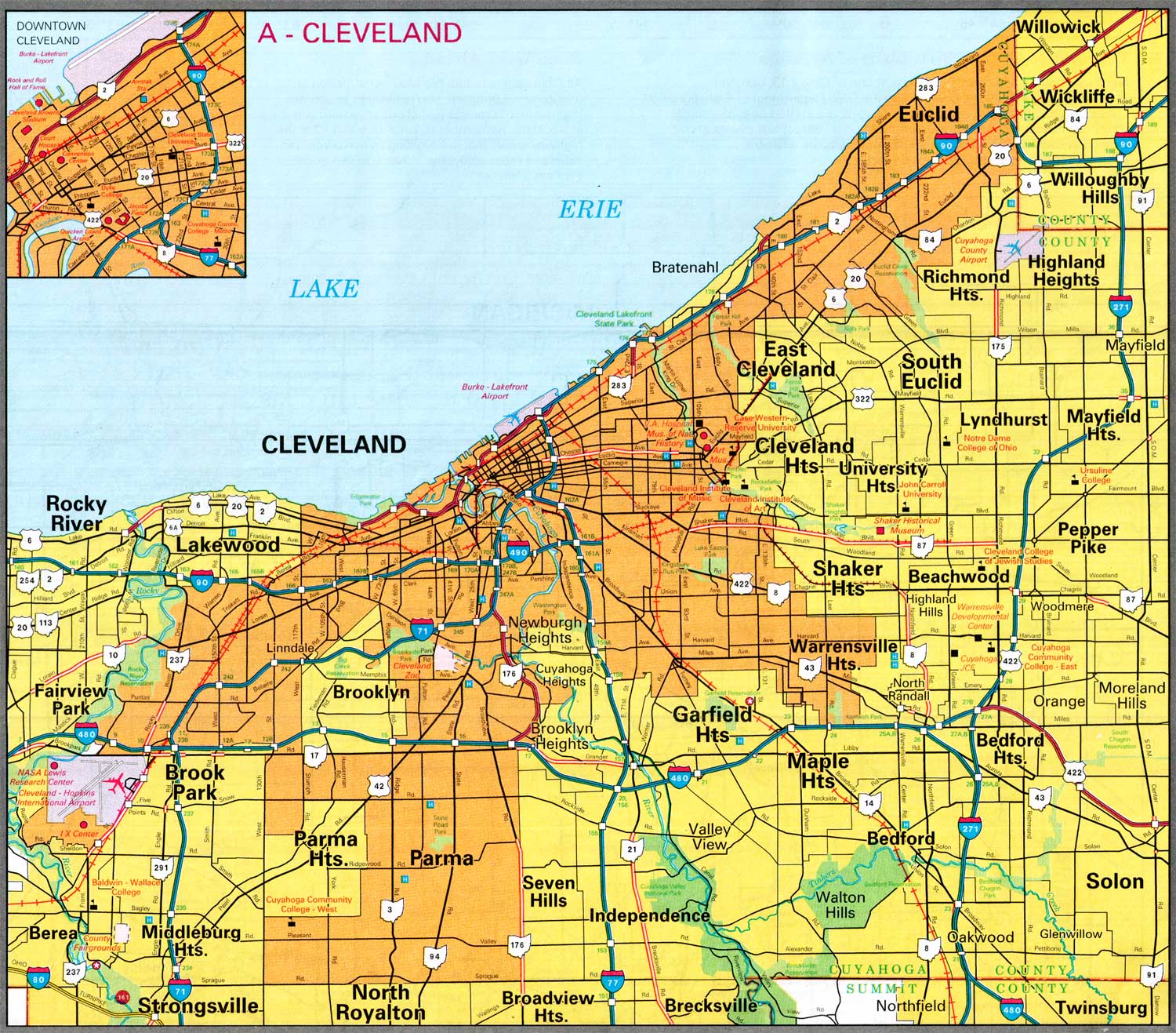
Image of Girard, south of Liberty Street, (site condition unknown)+ Niles Mahoning, at Pratt, (foundation is still visible). PHOTO:Seen in the 1980s shortly before demolition. (An example of the urban blight prevalent in Cleveland during the 1980's).http://www.urbanohio.com/forum2/index.php?topic=11674.0 Map of the City of Cleveland (where Talk Radio is set)http://www.dot.state.oh.us/maps/Cities/Cleveland.jpg 
Image of Cleveland, Ohio.

Perry Nuclear Plant

"The Perry Nuclear Power Plant is an infringement on the health and well-being of all the people living within a five-hundred-mile radius of its reactor core" - quote from Talk Radio 

The Perry Nuclear Power Plant is located on a 1,100-acre (450 ha) site onLake Erie, 40 miles (65 km) northeast of Cleveland in North Perry, Ohio, USA. The nuclear power plant is owned by First Energy Nuclear Operating Corporation. 
The reactor is a General Electric BWR-6 boiling water reactor design, with a Mark III containment design. The original core power level of 3,579 megawatts thermal was increased to 3,758 megawatts thermal in 2000, making Perry one of the largest BWRs in the United States. 
Built at a cost of $6 billion, Perry-1 is one of the most expensive power plants ever constructed. 
Perry was originally designed as a two-unit installation, but construction on Unit 2 was suspended in 1985 and formally cancelled in 1994. At the time of cancellation, all of the major buildings and structures for the second unit were completed, including the 500-foot tall cooling tower. Aerial pictures of Perry show what appears to be two nuclear units. The completed sections have since been raided for spare parts to maintain Unit 1. It is theoretically possible that a second unit could be constructed on the site, but current economical and regulatory conditions are not conducive to doing so (in addition to back taxes that would be due to the "abandon in place" designations on many objects in Unit 2). At any rate, the second unit would have to be re-built from the ground up to accommodate the newer reactor design that would almost certainly be installed. 
Perry was the 100th power reactor licensed in the United States. Start of commercial operation November 18, 1987. 
http://en.wikipedia.org/wiki/Perry_Nuclear_Generating_Station 

General Statement for Talk Radio

Dramaturg’s Statement for Talk Radio
Talk Radio by Eric Bogosian is set in a Cleveland radio station in 1987. It is truly a story about the fabric of America as reflected by the callers and the radio talk show host, Barry Champlain. Although controversial, tough-as-nails and sometimes rude, Barry Champlain is the perfect example of the troubled loner. He is fueled by loathing, cocaine, whisky, and cigarettes. Even though Talk Radio is centered around Barry Champlain to believe that this is Barry’s story could be said to miss Bogosian’s point. This is a story about America. It is set in the unassuming Midwest for a reason and the callers call in and talk about national concerns for a reason. The range of topics such as AIDS, the upcoming presidential elections, the War on Drugs, Communism, the Iran-Contra Affair, anti-Semitism, racism against African-Americans, and nuclear power show the fear and tension that existed in 1987 and in many ways still exists today.

Since the play is set in the confines of a radio studio, the fact that the interaction is mostly with Barry and the callers can be problematic since this limits the amount of on-stage activity. There is not a lot of leeway in regard to the set design since the location remains the same throughout the duration of the play. The creativity comes with how to address the callers and where to put them, on-stage or off-stage. It is also necessary to decide if the callers should use artificial amplification. Most of the critically accepted productions do. However, this could be problematic for production companies with smaller financial resources. The radio advertising spots have to be addressed too. These are written into the script and are a necessary part of the story. As such, it may be helpful to secure the help of a sound designer. Also, since there are no set changes, the lighting design is of importance as the lights help set the tone of the production and emphasize different individuals particularly when they have their monologues aside to the audience.

Most of the dialogue is spoken by Barry Champlain and at a very quick tempo. The actor who plays Barry will not only have to memorize his own lines, but the lines of the callers as well if the tempo of the show is to be maintained. Talk Radio is billed as a comedy even though the subject matter is dark. To keep the element of humor, albeit sarcastic humor, Talk Radio is utterly dependent upon the comic timing of the actors. The lack of comic timing is the kiss of death to a production. Critics often say that the play is too dark to be of any redeeming value and that they do not feel it is funny at all. Part of this problem is textual, however, and the productions that do work keep in mind that tempo is critical.

When addressing the issues surrounding the character of Barry Champlain it is important to note that the age and experience of the actor is important too. Critics have frowned upon young actors playing the role of Barry Champlain because they lack the life experience to portray the sardonic and bitter side of Barry. Of course, in an academic setting this often cannot be avoided. It is something that professional production companies should keep in mind when casting.
Textually Talk Radio provides further problems by the constant chain smoking of Barry. From an ethics perspective, the issue of how to handle the smoking must be addressed. On the one hand, there is a responsibility to portray the play exactly as the playwright has written. On the other hand, the consequences of second-hand smoke are well-known to the American public. Additionally, when casting the role of Barry the concern for that actor’s health must be considered. The question then arises of how to cast the role. Should only actors that smoke be considered for the role? If so, is that a form of discrimination? If the fact that an actor does or does not smoke is ignored, is there the possibility that an unsafe habit may be formed?

Finally, Talk Radio is all about subjects that are controversial. It definitely contains adult subject matter and adult language. As such it is imperative that the community in which the play will be produced be considered. This is particularly important if critical and patron acceptance is important.Posted by Erin Marie Williamsat 9:44 AM0 comments sunday, august 2, 2009The World of the Play: StatementEric Bogosian’s Talk Radio is set in Cleveland, Ohio in 1987. Cleveland is situated in the Great Lakes area near the shores of Lake Eerie. Its proximity to Lake Eerie made it a city of industry. It is actually almost directly across Lake Eerie from Detroit. Cleveland’s location to the Great Lakes means that there is a lot of moisture in the air and, therefore, it receives a fairly high precipitation rate.

It is known from the script that the radio station is housed in Terminal Tower, a fixture of Cleveland. Terminal Tower was originally, in part a train station, and has been remodeled in recent years to include not just offices but also shopping. It is interesting to note that Bogosian used a former train station to house the radio station. Cleveland in 1987 was in a financial recovery following a partial default by the city in 1979. The 1980’s was a decade which saw the city in major decline as there was very little public funds available for city works projects. During this time the U.S. auto industry was beginning decline as well which also affected the already financially desperate city. As the city began to decline, drugs became a part if the city’s makeup and crime rates increased. It seemed as though the national war on drugs could not have come at a better time.

Although Cleveland is a fairly small metropolitan area, in 1987 it was an area where Bogosian could really utilize the specific national affairs of the period in a specific time and place. Cleveland is Middle America. Callers from Cleveland and the surrounding suburbs call in to tell Barry about what is on their mind. The callers act as the American conscious and reflect the way ordinary people felt in a pretty extraordinary time. 1987 is the end of Reagan’s presidential tenure people are beginning to think about who should take over after Reagan was gone. People wondered if perhaps, George Bush would fit the bill. The scandal of the Iran Contra affair was front and foremost in the American mind as was the Lebanon Hostage Crisis. There were a lot of unknown and uncertainties at this time in the world, in America, and in Cleveland. A few years before President Reagan and the Pope were nearly killed in separate assassination attempts. The AIDS epidemic was frightening and real with many people succumbing to this little understood disease. Although politics in the USSR was shifting, people were still uncertain about communism and were frightened about the Cold War. Nuclear anything was dirty word and so the Perry Nuclear Power Plant outside of Cleveland was controversial to say the least.

In spite of the precarious economic state of affairs in Cleveland, there were still ways that Cleveland residents could entertain themselves. Sports, particularly baseball, were very popular. In 1987, the Cleveland Indians were expected to go all the way to the World Series. They had an excellent roster of players which included legendary pitcher Phil Niekro. It was a bitter disappointment when another Midwest rival, the Minnesota Twins, won the series that year. Among other forms of entertainment, music was very important. The type of music being played on the airwaves was changing and though listeners could still hear the progressive rock of the 1970’s, the airwaves were filled with a new pop sound. The new pop sound came from artists such as Michael Jackson and Madonna. Also, heavy metal was a popular form of music that was loud and rebellious in much the same way as America’s youth had become. In Talk Radio, Bogosian uses the character Kent as an archetype for the rebellious teenager of the time. However, in spite of his “punk” haircut and his shout-out to the babes at the local mall there is something of substance to him. Kent’s reference to Heavy Metal band Megadeath’s album titled “Peace Sells…But Who’s Buying” is a very pointed reference, a summary, of the state of Barry Champlain’s talk radio show, of the city of Cleveland, of the state of America’s youth, of the state of America’s politics and society, and of the state of the world. Bogosian’s ability to use the small world Barry Champlain and Cleveland, Ohio to spotlight the larger world of the United States and the entire globe is something that was relevant in Public Theatre’s 1987 premiere of Talk Radio, was relevant in Oliver Stone’s 1988 film version of Talk Radio, was relevant in the 1997 revival of Talk Radio on Broadway, and is something that is still relevant to the audience today.Posted by Erin Marie Williamsat 2:24 PM0 comments Statement: Producing the PlayProducing Talk Radio

Text Issues

Eric Bogosian’s Talk Radio is set in Cleveland, Ohio in 1987. Cleveland is situated in the Great Lakes area near the shores of Lake Eerie. Its proximity to Lake Eerie made it a city of industry. It is actually almost directly across Lake Eerie from Detroit. Cleveland’s location to the Great Lakes means that there is a lot of moisture in the air and, therefore, it receives a fairly high precipitation rate.

It is known from the script that the radio station is housed in Terminal Tower, a fixture of Cleveland. Terminal Tower was originally, in part a train station, and has been remodeled in recent years to include not just offices but also shopping. It is interesting to note that Bogosian used a former train station to house the radio station. Cleveland in 1987 was in a financial recovery following a partial default by the city in 1979. The 1980’s was a decade which saw the city in major decline as there was very little public funds available for city works projects. During this time the U.S. auto industry was beginning decline as well which also affected the already financially desperate city. As the city began to decline, drugs became a part if the city’s makeup and crime rates increased. It seemed as though the national war on drugs could not have come at a better time.

Although Cleveland is a fairly small metropolitan area, in 1987 it was an area where Bogosian could really utilize the specific national affairs of the period in a specific time and place. Cleveland is Middle America. Callers from Cleveland and the surrounding suburbs call in to tell Barry about what is on their mind. The callers act as the American conscious and reflect the way ordinary people felt in a pretty extraordinary time. 1987 is the end of Reagan’s presidential tenure people are beginning to think about who should take over after Reagan was gone. People wondered if perhaps, George Bush would fit the bill. The scandal of the Iran Contra affair was front and foremost in the American mind as was the Lebanon Hostage Crisis. There were a lot of unknown and uncertainties at this time in the world, in America, and in Cleveland. A few years before President Reagan and the Pope were nearly killed in separate assassination attempts. The AIDS epidemic was frightening and real with many people succumbing to this little understood disease. Although politics in the USSR was shifting, people were still uncertain about communism and were frightened about the Cold War. Nuclear anything was dirty word and so the Perry Nuclear Power Plant outside of Cleveland was controversial to say the least.

In spite of the precarious economic state of affairs in Cleveland, there were still ways that Cleveland residents could entertain themselves. Sports, particularly baseball, were very popular. In 1987, the Cleveland Indians were expected to go all the way to the World Series. They had an excellent roster of players which included legendary pitcher Phil Niekro. It was a bitter disappointment when another Midwest rival, the Minnesota Twins, won the series that year. Among other forms of entertainment, music was very important. The type of music being played on the airwaves was changing and though listeners could still hear the progressive rock of the 1970’s, the airwaves were filled with a new pop sound. The new pop sound came from artists such as Michael Jackson and Madonna. Also, heavy metal was a popular form of music that was loud and rebellious in much the same way as America’s youth had become. In
 Talk Radio, Bogosian uses the character Kent as an archetype for the rebellious teenager of the time. However, in spite of his “punk” haircut and his shout-out to the babes at the local mall there is something of substance to him. Kent’s reference to Heavy Metal band Megadeath’s album titled “Peace Sells…But Who’s Buying” is a very pointed reference, a summary, of the state of Barry Champlain’s talk radio show, of the city of Cleveland, of the state of America’s youth, of the state of America’s politics and society, and of the state of the world. Bogosian’s ability to use the small world Barry Champlain and Cleveland, Ohio to spotlight the larger world of the United States and the entire globe is something that was relevant in Public Theatre’s 1987 premiere of Talk Radio, was relevant in Oliver Stone’s 1988 film version of Talk Radio, was relevant in the 1997 revival of Talk Radio on Broadway, and is something that is still relevant to the audience today.
Posted by Erin Marie Williamsat 2:24 PM0 comments 
Producing Talk Radio
Textual Issues
Since
 Talk Radio is about a radio program and is a snapshot of “one night in the life of Barry Champlain’s radio program” there are immediate issues. Radio is not something that is meant to be viewed, so there is a problem presented before one even reads the entirety of the script. The issue becomes how to present a predominately listened to medium in a visual way. This is particularly tough because there is very little physical interaction between any of the characters. What drives the production is the callers. The callers pose another interesting textual problem. They were written to be heard and not necessarily seen. If the callers are not visible, then it becomes necessary to use artificial amplification so that they can be heard. This could be problematic for some theatres that do not have the necessary equipment. If the decision is made to put the callers on stage, then there will be more costumes needed even if they are basic. There are close to thirty callers so the sheer number of these extras must be considered. The content of Talk Radio can be controversial to say the least. In reviews Barry Champlain is often referred to as a “shock-jock” and with lines referring to owning blacks or anti-Semite leanings or yelling at a young pregnant teenager for how she “did this” to her boyfriend most of the material is controversial and adult. In the text, it is specifically referenced that Barry smokes heavily. He is meant by Bogosian to be constantly smoking and drinking throughout the whole play. Smoking on stage, particularly constantly, poses problems for a variety of reasons from the fire code to the health of the actor to the health of the audience.